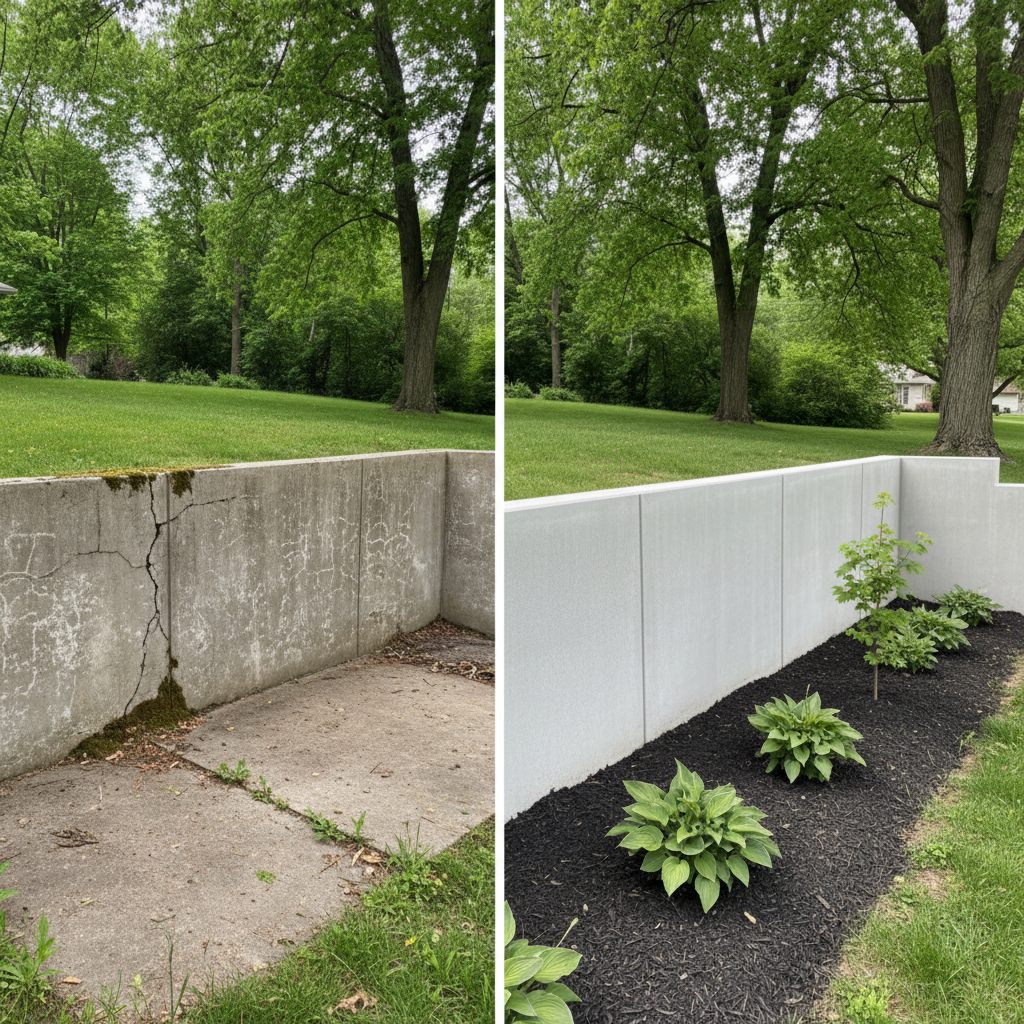
Alright, let's talk about retaining walls. Maybe you've got a slope in your yard that's eroding, or you just want to carve out some usable, level space. When you're thinking about concrete retaining walls, you've generally got two main options: using precast concrete blocks or going with a poured-in-place concrete wall. Both have their uses, but they're definitely not the same thing. I see folks all over Muncie, especially in older spots like the Minnetrista area, dealing with all sorts of grade changes, and picking the right wall is absolutely crucial.
Precast Concrete Block Walls: The Modular Approach
You've definitely seen these. They're those interlocking blocks, usually with a textured face that sort of mimics natural stone. They come in different sizes and styles, and honestly, they're pretty popular for a good reason.
- Cost: Generally, precast block walls are going to be less expensive upfront, particularly for smaller, simpler walls. The materials are mass-produced, and installation can be quicker since you're mostly just stacking and locking them together. Less time on the job often means less money out of your pocket.
- Installation: This is where they really shine, especially for DIYers or smaller projects. For a pro, it's still work, but it's often less involved than pouring concrete. You don't need forms, and you don't have to sit around waiting for concrete to cure. You can usually get these walls up pretty fast.
- Appearance: They offer a decent variety of textures and colors. You can find something that looks like split-face stone, or a more uniform, modern block. They can look really sharp, provided they're installed correctly.
- Durability & Maintenance: Okay, here's the catch. While the blocks themselves are tough, the wall's overall strength really hinges on how well the base is prepared and the quality of the backfill. If that base isn't perfect, or if drainage isn't handled properly, you could run into trouble. We get a lot of freeze-thaw cycles here in Indiana, and that can make block walls shift over time if they weren't engineered and installed just right. You might notice blocks pushing out or settling unevenly. Maintenance usually means keeping the drainage clear and sometimes re-aligning a block or two if they move. They're just not built for super high loads or extreme pressures without some serious engineering.
Poured-in-Place Concrete Walls: The Solid Choice
This is what we at Midway Concrete Co really specialize in. We build forms, pour the concrete right there on your site, and then take the forms off once it's cured. It's a completely different animal.
- Cost: Expect to pay more for a poured-in-place wall. There's simply more labor involved in building the forms, setting rebar, pouring, and then stripping the forms. The materials themselves (concrete, rebar, form lumber) also add up. But you're paying for a whole lot more structural integrity, you know?
- Installation: It's a more involved process. You need skilled people to build sturdy forms, place the rebar correctly for strength, and then pour the concrete evenly. Weather plays a bigger role too; you can't pour in freezing temperatures or heavy rain. It takes longer from start to finish because of the time needed for curing.
- Appearance: A poured wall can be pretty much whatever you want it to be. You can leave it with a smooth, natural concrete finish, or you can get creative. We can stamp it with patterns, stain it, or even apply a veneer of stone or brick later on. It offers a very clean, modern look if left plain, or a highly customized one if you choose to decorate it.
- Durability & Maintenance: This is where poured concrete truly excels, especially given Muncie's conditions. When it's designed right and reinforced with rebar, a poured concrete wall becomes one solid, monolithic structure. It's incredibly strong and stands up to the pressures of soil, water, and our crazy freeze-thaw cycles. You won't see individual blocks shifting or pushing out. With good drainage behind it, a poured wall will stand for decades with almost no maintenance. You might occasionally need to clean it or re-seal it, but structural issues are rare if it's done correctly. It's built to handle serious loads and last a lifetime.
So, What's My Recommendation for Muncie Homeowners?
Look, for a small, decorative garden border, or a really low wall (say, under 2 feet) that isn't holding back much soil, precast blocks can be a perfectly fine, economical choice. They're quick, and they look good.
However, if you're talking about anything substantial—a wall over 2-3 feet high, a wall holding back a significant amount of soil, or a wall where failure would cause real problems (like undermining a driveway or a foundation)—then I'm always going to point you towards a poured-in-place concrete retaining wall.
The initial cost might be higher, sure, but the long-term durability, stability, and genuine peace of mind you get with a properly engineered and poured concrete wall are simply unmatched. Especially with our clay soils and the way water moves through them here in Delaware County, you really need that kind of sturdy solution. You build it once, you build it right, and you won't have to worry about it for generations. It's an investment that pays off big time by preventing future headaches and repairs.
Ready to Talk Walls?
If you've got a slope that needs taming, or you're just not sure which way to go, give us a call at Midway Concrete Co. We can come out, take a look at your property, and give you an honest assessment of what's going to work best for your specific situation and budget. Don't guess when it comes to something as important as a retaining wall, right?