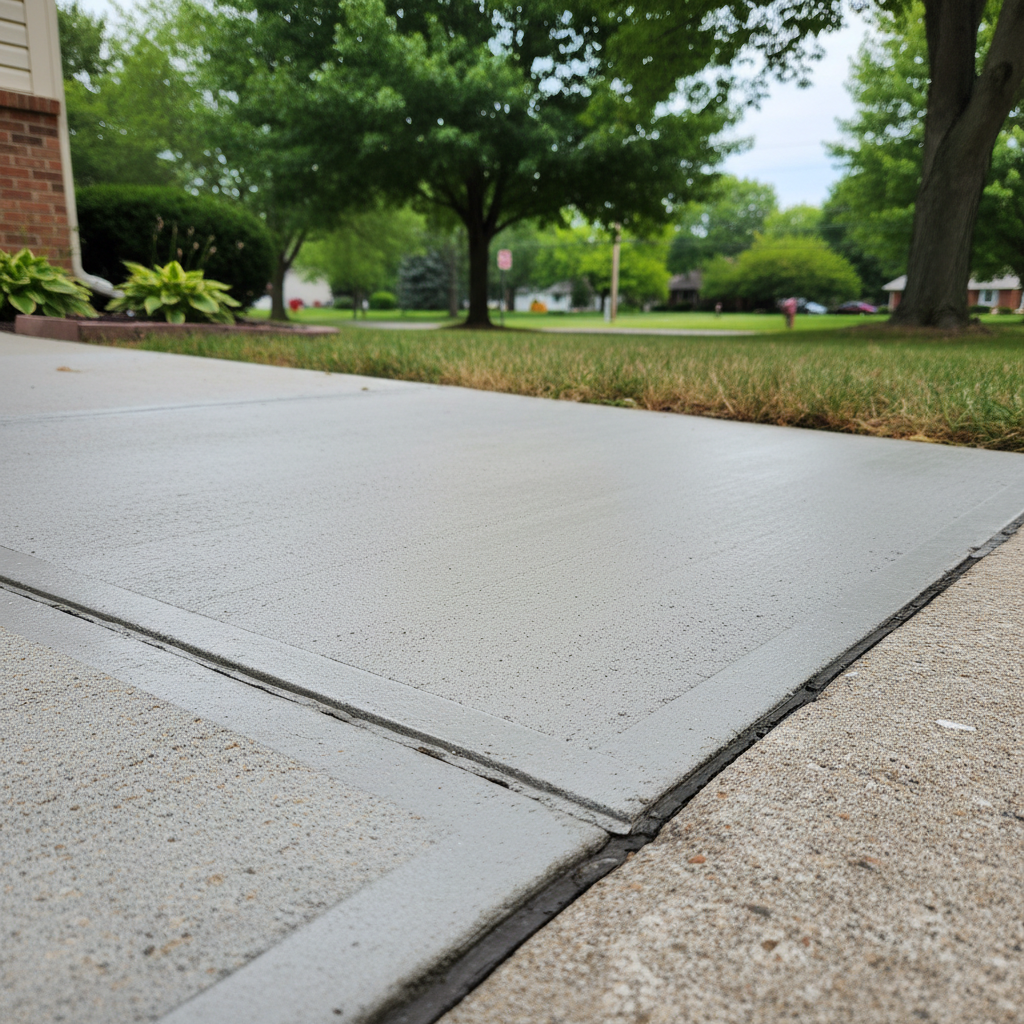
What's causing my concrete to crack or sink in the first place?
This is probably the number one question I get, and honestly, there's usually a few things going on at once. Here in Muncie, our freeze-thaw cycles are a big culprit, no doubt about it. Water gets into tiny cracks, freezes, expands, and then thaws, leaving bigger cracks behind. It's a constant battle, really. Then there's the soil. We've got a lot of clay in the ground around here, especially in older neighborhoods like Minnetrista. Clay expands when it's wet and shrinks when it's dry, which can cause the ground under your concrete to shift and settle unevenly. Poor drainage is another huge one. If water is pooling near your foundation or driveway, it's going to erode the soil underneath, leading to sinking and cracking. Sometimes it's just age; concrete isn't immortal, after all. And occasionally, it's a bad pour from the start – not enough rebar, the wrong mix, or improper sub-base prep. We see it all.
Can I just patch the cracks myself, or do I need a pro?
Look, for really tiny, hairline cracks that are just cosmetic, you can probably grab some caulk or a patch kit from the hardware store and give it a shot. It might hold for a bit. But if you're seeing cracks wider than a credit card, or if the concrete is sinking, spalling (flaking apart), or crumbling, you're usually looking at a bigger issue than a simple patch can fix. Those DIY patches often don't bond well long-term, and they definitely don't address the underlying problem. You'll just end up patching again and again. A professional like us at Midway Concrete Co can assess the root cause and recommend a solution that actually lasts, whether that's a proper repair or a full replacement.
Is concrete repair expensive? What factors affect the cost?
That's like asking how much a car costs, right? It really depends. Simple crack filling or minor surface repair is obviously going to be a lot less than lifting a sunken slab or replacing a whole section. The main factors are the type and extent of the damage, the repair method we use, and the size of the area. If we're talking about concrete leveling (mud jacking or polyjacking), the cost depends on how much material we need to inject and how many holes we have to drill. If it's a full tear-out and replace, then you're looking at demo, hauling away the old concrete, preparing the sub-base, and pouring new concrete. Access to the area can also play a role; if it's a tight spot, it might take more labor. We always give a clear, upfront estimate so you know what you're getting into.
What's the difference between concrete leveling and just replacing the slab?
Good question. Concrete leveling, which we often do with polyjacking these days, is about lifting a sunken slab back to its original position without replacing it. We drill small holes, then inject a material (either a cement-based grout for mud jacking or an expanding polyurethane foam for polyjacking) underneath the slab. This material fills voids and lifts the concrete. It's generally quicker, less disruptive, and often more affordable than replacement, especially for driveways, patios, or garage floors that are otherwise in good shape. Replacement means we bust out the old concrete, haul it away, prep the ground all over again, and pour new. You'd go for replacement if the concrete is severely cracked, crumbling, or if the surface is just too far gone to save with leveling. It's a bigger job, but sometimes it's the only real option for long-term stability.
How long does a concrete repair last?
If it's done right, a good concrete repair should last for many years, often as long as the surrounding concrete, or even longer if we've addressed the underlying cause. For example, if we level a slab and also improve drainage in the area, that repair is going to hold up a lot better than if we just patch a crack and let water keep washing away the soil. Polyjacking repairs, when done correctly, can last for decades. A full replacement, assuming proper installation and maintenance, should give you 20-30 years or more. But remember, concrete is exposed to the elements, traffic, and our Muncie weather. Nothing lasts forever without some care.
When is the best time of year to get concrete repair done in Muncie?
Honestly, we can do repairs pretty much any time the ground isn't frozen solid. Spring, summer, and fall are ideal. In spring, once the ground thaws and dries out a bit, it's a great time to tackle those issues that popped up over winter. Summer is always busy, and fall is good before the deep freezes set in. We try to avoid pouring new concrete in extreme heat or cold, but repairs like polyjacking can often be done in colder temperatures as long as the ground isn't frozen. It's usually best to get it done as soon as you notice a problem, before it gets worse.
How can I prevent concrete damage in the future?
Prevention is always cheaper than repair, right? First, make sure your drainage is good. Get those downspouts extended away from your foundation and concrete slabs. Keep an eye on any areas where water pools. Second, seal your concrete every few years. This helps protect it from water penetration, chemicals, and those nasty freeze-thaw cycles. Third, don't overload your concrete. If you've got a heavy RV or trailer, make sure your driveway was built to handle that weight. And finally, address small issues quickly. A tiny crack can turn into a big problem if you ignore it. A little maintenance goes a long way in extending the life of your concrete.